







I have been a patient of Nick’s for many years, using custom orthotics and various treatments. Nick and the team always provides a knowledgeable, friendly and helpful approach to everything. After many years of extreme exercise leading to a recent arthritis diagnosis in my foot, his treatment helped me complete a 50k ultra marathon in the Swiss Alps. Thank you.

Metatarsal Stress Fracture Treatment in Romsey
Assessment of a metatarsal stress fracture, and the training load behind it.
Background
What Is a Metatarsal Stress Fracture?
The metatarsals are the long bones located within the forefoot.
A stress fracture develops when repetitive loading creates microscopic damage within the bone.
Normally, bone repairs itself and becomes stronger. However, when training loads, activity levels or mechanical stresses increase faster than the body’s ability to recover, a stress fracture can develop.
Unlike an acute fracture caused by a single traumatic event, stress fractures usually develop gradually over time.
Symptoms of a Metatarsal Stress Fracture
Common symptoms include:
- Gradually increasing pain in the forefoot
- Pain during walking or running
- Pain that worsens with activity
- Tenderness over a specific metatarsal bone
- Swelling around the affected area
- Discomfort when standing on tiptoes
- Pain that initially settles with rest but gradually becomes more persistent
Many patients describe symptoms as feeling like a bruise that never fully settles.
What Causes Metatarsal Stress Fractures?
Common contributing factors include:
- Sudden increases in training volume
- Changes in running intensity
- Excessive walking or standing
- Poor load management
- Reduced bone capacity
- Biomechanical overload
- Inappropriate footwear
- Previous stress injuries
In many cases, several factors combine to increase stress through the forefoot.
Assessment and Diagnosis
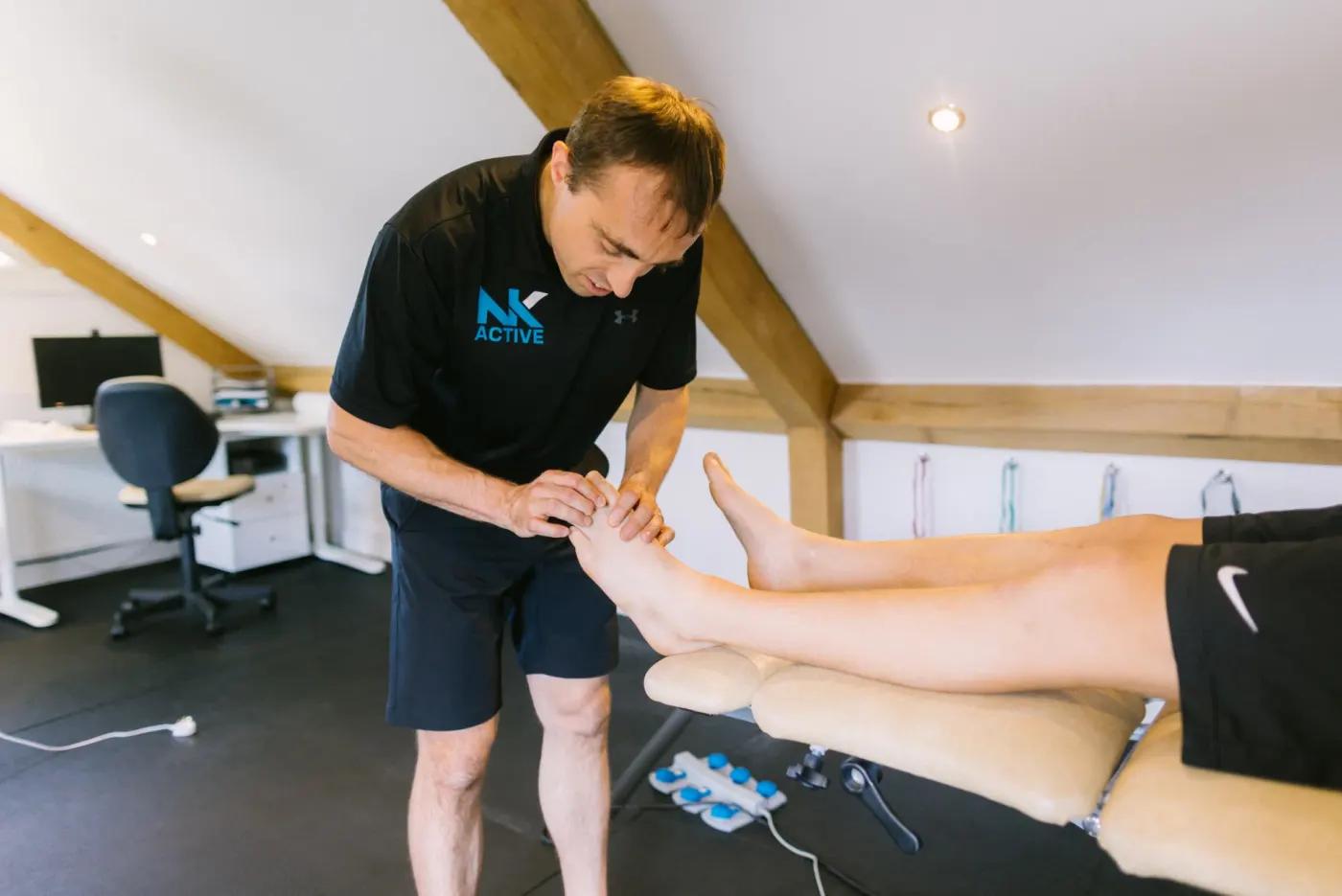
At NK Active, assessment begins with a detailed review of:
- Symptom history
- Training load
- Exercise habits
- Foot mechanics
- Footwear
- Previous injury history
Because stress fractures can mimic other forefoot conditions, accurate diagnosis is essential.
Where appropriate, we may recommend imaging to confirm the diagnosis and assess severity.
Treatment for Metatarsal Stress Fractures
Load Management
Reducing stress through the injured bone is the first priority.
A structured rehabilitation programme helps maintain strength and fitness while supporting recovery.
The AlterG allows patients to continue exercising while significantly reducing weight-bearing forces through the foot.
Assessment of walking and running mechanics can identify factors contributing to excessive forefoot loading.
Where appropriate, orthoses can help improve load distribution and reduce stress through vulnerable structures.
Return to Running Planning
We guide patients through a progressive return-to-running programme designed to minimise recurrence risk.
Why Choose NK Active?
Our team combines podiatry, rehabilitation, biomechanics and advanced technology to support recovery from bone stress injuries. By identifying why the injury occurred, we help reduce the likelihood of future problems.

Common Questions
Frequently Asked Questions
How long does a metatarsal stress fracture take to heal?
Recovery time varies depending on severity, but most cases require several weeks of structured management.
Can I continue exercising?
In many cases, yes. Alternative exercise and reduced-load training options can often be used during recovery.
Will I need a boot?
This depends on the location and severity of the injury.